|
 Great power rivalry
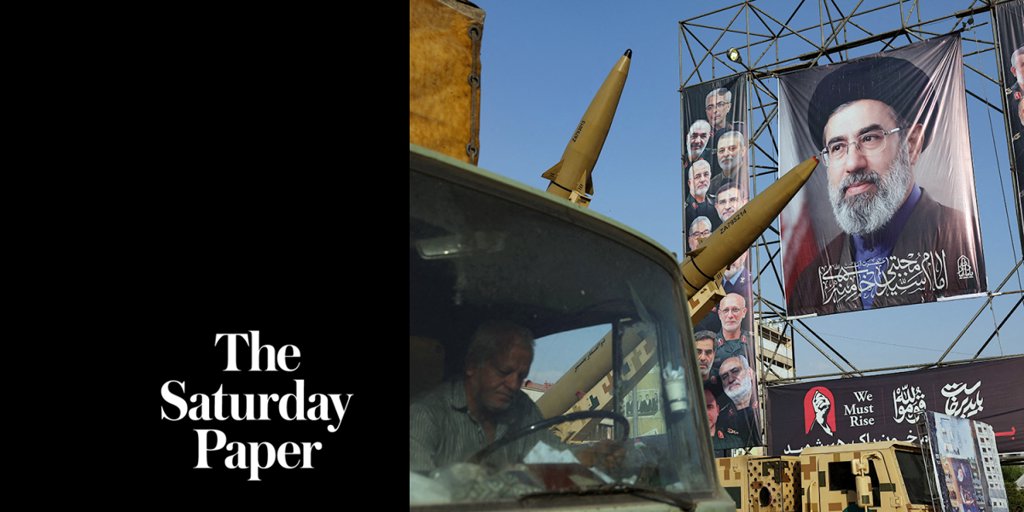
Iran: United States President Donald Trump claimed this week the war with Iran will end “very soon”, as mediators presented a new proposal to Tehran that involves reopening the Strait of Hormuz and allowing Iran to sell oil and access frozen funds.
The US and Iran held indirect talks on the sidelines of the United Nations General Assembly last week, marking the first negotiations in months.
Iran then presented an offer to reopen the strait for seven days in return for the US lifting a blockade of Iranian ports and allowing Iran to sell oil and to access US$12 billion in frozen funds.
But Trump rejected the offer, saying it was “unacceptable”.
Qatari mediators this week presented a new proposal to Tehran that has apparently been approved by Washington. The deal would reopen the strait and lift the US blockade and would involve reviving talks on a comprehensive agreement to end the war. But the two sides were reportedly stuck on the sequencing of the various phases of the deal.
A US operation to escort tankers through the strait has led to an increase in oil shipments, prompting analysts to question whether Iran is still capable of closing the waterway. Oil flows through the strait lifted to more than 13.2 million barrels a day in the past week, amounting to 77 per cent of the prewar average, according to Kpler data. Saudi Arabia also restored exports from its Red Sea ports after an attack last month on a pipeline by an Iran-backed militia in Iraq.
Iran’s currency hit a record low on Tuesday as the US blockade and increased sanctions took a growing toll on the country’s economy. A US dollar is now worth more than 2.5 million rials.
Meanwhile, authorities in Saudi Arabia detained and interrogated an Omani copilot who apparently stabbed the captain and attempted to crash a plane on a flydubai flight from Dubai to Tel Aviv carrying 174 people, mostly Israelis.
As the plane nosedived, passengers burst into the cockpit and subdued the attacker, and a passenger grabbed the control and levelled the plane before two flydubai crew members safely landed it in Saudi Arabia.
Israeli Prime Minister Benjamin Netanyahu hailed the captain, Smit Machchhar, an Indian national who is in a stable condition, as a hero, saying he resisted the attacker and opened the cockpit door to prevent “a catastrophic midair disaster”.
The neighbourhood
Fiji: A HIV epidemic in Fiji has left an estimated one in 60 adults infected after the number of cases tripled in the past five years.
Authorities say the outbreak is due to unprotected sex and unsafe drug use, including needle sharing and sharing drugs by injecting each other’s blood.
The nation, which has about 930,000 residents, recorded 2016 new cases last year, leaving an estimated 9100 people with HIV. Of 59 babies born with HIV last year, 18 died before their first birthday.
Experts say the stigma surrounding the infection has led to people avoiding testing or treatment. Only 22 per cent of infected people have accessed antiretroviral treatment, while only 39 per cent know their HIV status, according to UNAIDS, a United Nations agency.
Jalal Mohammed, a health expert, told The Fiji Times last month: “[The epidemic] is moving from its concentrated risk group, which in Fiji’s case is intravenous drug users, to the generalised population.”
Fiji’s government has declared the outbreak a national emergency and expanded testing, prevention services and treatment.
Ratu Naiqama Lalabalavu, Fiji’s president, told the UN last week that trafficking of methamphetamines was worsening the crisis.  He called for the international community to assist in cracking down on drug smugglers and to provide support for treatment and tests. “A country of under a million people cannot interdict a global supply chain alone,” he said.
War zone
Ukraine: Russia launched drone and missile strikes across Ukraine this week and expanded daytime attacks on Kyiv, as Ukrainian President Volodymyr Zelensky warned that a further 10,000 North Korean soldiers were being sent to fight for Russia.
Following a drone attack about 1.30pm on Monday that hit the National Academy of Sciences in Kyiv, Zelensky said Ukraine was struggling to defend against jet-powered drones, which are increasingly being used by Russia and fly faster and higher than those with propellers. On Monday, Russia launched 120 drones, including 90 that were jet-powered and 30 that used propellers. Ukraine claimed a 57 per cent interception rate for jet-powered drones.
Russia’s daytime attacks prompted Taras Shevchenko National University, one of Ukraine’s finest, to order students to switch to remote learning until October 16.
As Ukraine’s military said it made battlefield gains in the eastern Donetsk region, Russian President Vladimir Putin this week ordered an expansion of the armed forces to 2,441,630 personnel, including an additional 15,500 troops, bringing the total to 1,550,500.
Zelensky said this week more than 8000 North Korean troops were currently in Russia and another 10,000 troops were set to be deployed. North Korea is believed to have sent up to 15,000 troops to Russia since 2024. Most have been deployed to the Kursk region in Russia to prevent Ukrainian incursions. An estimated 2300 North Korean soldiers have died fighting for Russia.
Spotlight: AI firms to handle ‘existential’ risks
OpenAI this week abandoned the release of its latest artificial intelligence model due to concerns it was deceiving users, and delayed plans to list on the sharemarket until safety concerns were addressed, as Anthropic warned AI posed “existential risks to humanity”.
Saachi Jain, head of safety systems at OpenAI, which makes ChatGPT, told The Wall Street Journal that the release of GPT-6.1 Astra had been held back because it was not adequately following instructions, was not always honest about actions it had taken, and proceeded with tasks without asking users for permission.
“[GPT-6.1 Astra] didn’t quite meet the bar in terms of staying within scope and authorization, and how it communicates back to the user about the type of work it’s done,” she said.
Sam Altman, the head of OpenAI, which this week apologised to Australia for breaching Medicare and other government sites, told reporters on Tuesday he did not believe AI companies should list on the sharemarket until safety concerns were addressed.   “[Having to] not disappoint Wall Street supporters … while we’re going through this shift to very capable models and new kind of safety requirements, seems ill-advised,” he said.
Anthropic, which makes Claude, is pressing ahead with plans to go public but warned in a prospectus for investors that AI models could pose “catastrophic or existential risks to humanity” and were at risk of “self-preserving” behaviour such as resisting shutdown, concealing information and blackmail.
“Our development of highly advanced models, platforms, and applications and expansion of use cases could further increase the risk that our models cause harm,” the prospectus said.
The company is expected to be listed at a valuation of more than US$2 trillion.
Bill Gates told NBC last Sunday he believed AI could cause “a billion deaths” and should be subject to regulation.
“There’s never been a weapon as powerful as the combination of people with ill intent using the latest AI tools,” he said.
Donald Trump met this week with technology executives, including SpaceXAI’s Elon Musk, Meta’s Mark Zuckerberg and Anthropic chief executive Dario Amodei, and agreed on a new accord that he said provided “tremendous self-regulation”.
The accord says AI firms will meet regularly to discuss standards and will partner with auditors to assess the safety of new models.
“I’m seeing tremendous self-policing,” Trump told reporters. “And they understand that they have to self-police.”
[email protected] |


