|
 Donald Trump was inaugurated as President for his second term on Jan.
20, 2025. Over the subsequent 20 months, the S&P 500 (SNPINDEX: ^GSPC) rose 27.6%. During that same 20-month stretch of Trump's first term, from January 2017 to September 2018, the S&P 500 gained 28.5%. What can this tell us about how the upcoming midterm election might affect the stock market? Missed Nvidia in 2009? This Rare Signal Is Flashing Again. In 2009, a "Double Down" signal flashed for a little-known chipmaker called Nvidia. For the first time in years, that same "Total Conviction" signal is flashing for a company 1/100th the size of Nvidia. Continue »
That's the wrong question. The real lesson here is: Most of the time, the stock market goes up no matter who's in charge in Washington, D.C.
This doesn't mean politics don't matter. Far from it. Elections have consequences that affect many aspects of American life: taxes, regulations, national security, education, public health, and the country's face in public affairs, foreign trade, and international relations.
But the stock market is bigger than any individual presidency, Congress, or election.  The stock market moves for complex reasons that no politician can control (even if some of them think they can).
Let's look at why the midterm elections might matter for the stock market less than people think -- and why that's a good thing for long-term investors.
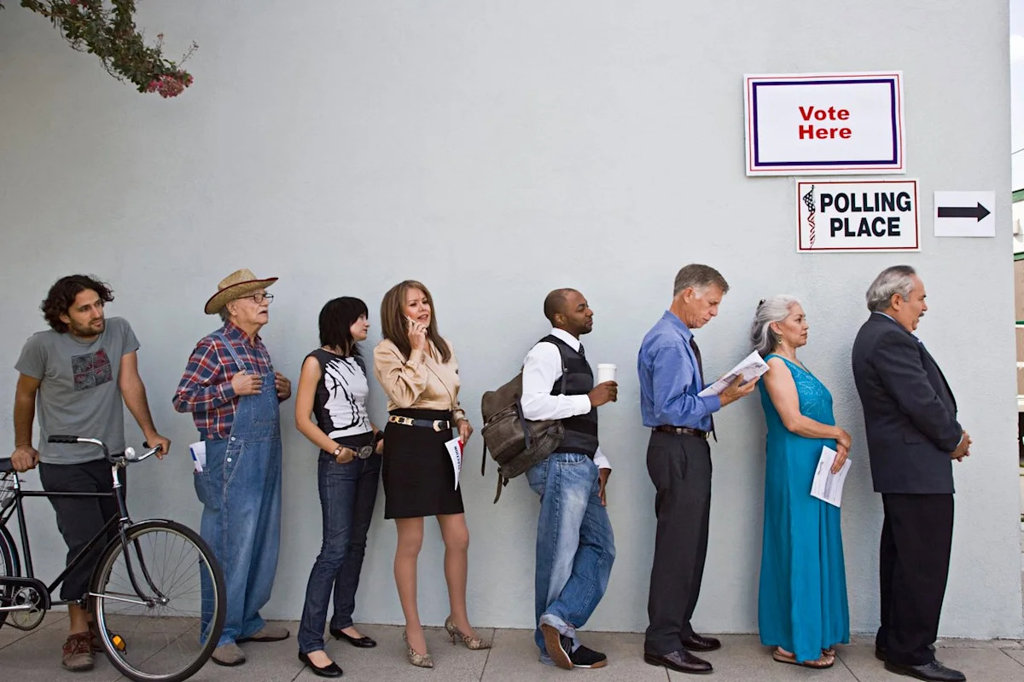
Image source: Getty Images. Stock market returns don't depend on elections
The current U.S. political climate often feels exceptionally angry, noisy, and divisive. In the everyday rush of reading news headlines, it's easy for investors to whipsaw between extreme emotions of assuming that "the sky is falling" or "this is the greatest news ever." But in the long run, a lot of that noise fades away.
According to U.S. Bancorp (NYSE: USB) research analysis of 75 years of market data, election outcomes have "minimal impact" on financial market performance. The stock market and bond market tend to do what they do based on larger, long-term trends in the economy and inflation -- not the elections or actions of any political leaders.
U.S. Bank's research found that only one combination of government power in Washington tended to predict lower-than-average stock market returns: a Republican in the White House and full Democratic control of Congress (the House of Representatives and the Senate). We might be heading for that outcome in November. But even then, those negative historic returns were modest (about 1% below the average return) and only for three months after the election.
Politicians come and go -- the S&P 500 keeps going
It's possible that the S&P 500 will go into a sell-off after the midterms. If the market wobbles, it could be for numerous reasons: political gridlock, rising interest rates, or jitters about the artificial intelligence trade. But if you're a long-term investor and truly ready to leave your money alone to grow and compound for years to come, none of those alarming short-term headlines should matter to you.
Here's why: the S&P 500 has been a steadfast performer through presidencies and Congresses of both parties. For the past 98 years, the S&P 500 has delivered annualized returns of 9.98%. Over the past 10 years, the Vanguard S&P 500 ETF (NYSEMKT: VOO) has compounded at an average rate of 15.3% per year.
These serious wealth-building returns are there for the taking, but only for investors who can look past short-term, stressful political news and stick with their long-term financial plan.
Keep calm about politics. Keep thinking like a long-term investor. Missed Nvidia in 2009? This Rare Signal Is Flashing Again
In 2009, a "Double Down" signal flashed for a little-known chipmaker called Nvidia. If you'd invested $5,000 then, you'd be sitting on $2,885,382 today.*   Now, for the first time in years, that same "Total Conviction" signal is flashing for a company 1/100th the size of Nvidia. It's a key player in the $1.8 trillion space race, and with the stock recently sitting 20% off its highs, the window to get in early is closing fast.
Continue »
*Stock Advisor returns as of October 22, 2026.
Ben Gran has no position in any of the stocks mentioned. The Motley Fool has positions in and recommends U.S. Bancorp and Vanguard S&P 500 ETF. The Motley Fool has a disclosure policy.
The S&P 500 Rose 27.6% in the First 20 Months of President Trump's Second Term, Close to the 28.5% Gain Over the Same Stretch of His First Term.
Here's Why That Comparison Matters for Investors Heading Into the Midterms. was originally published by The Motley Fool |


